
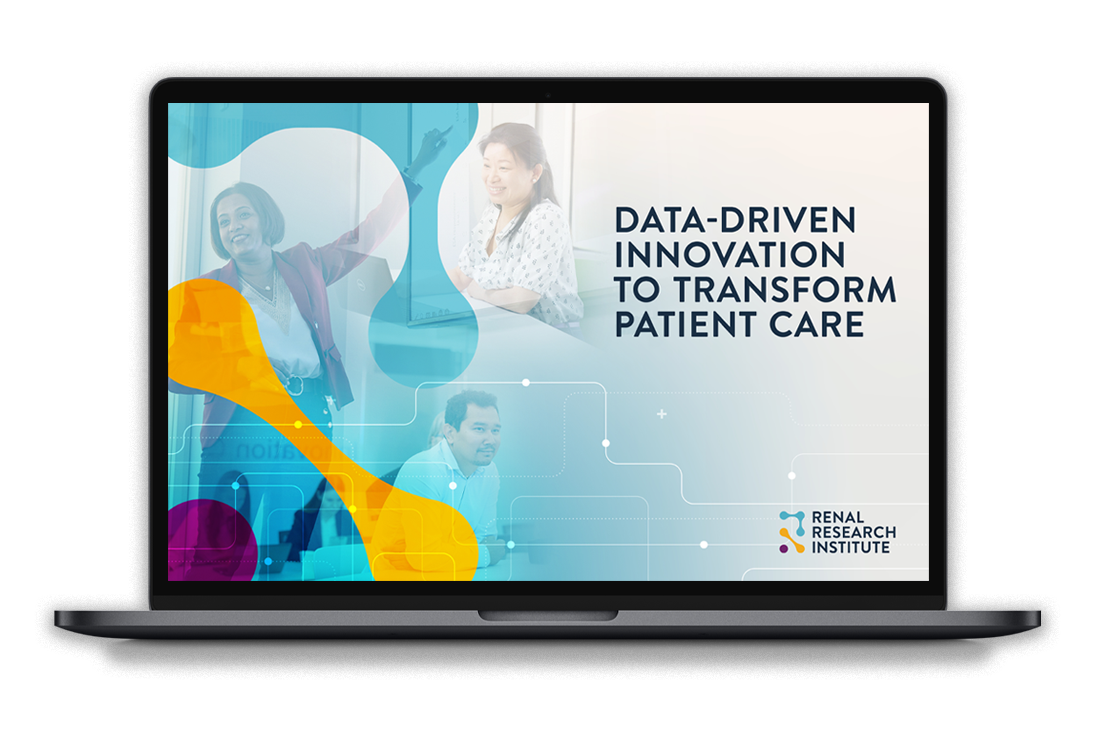



A highly diverse team imagining the undiscovered

RENAL RESEARCH INSTITUTE

Transforming
patient care
through data-driven
innovation

ABOUT THE RENAL RESEARCH INSTITUTE

The heart of RRI’s capacity for innovation is our ability to examine complex problems through multiple lenses.

The Renal Research Institute (RRI) is an internationally recognized incubator of ideas, treatment processes, and technologies to improve the lives of kidney patients. RRI’s leadership in data analytics, computational biomedicine and AI, as well as our access to a large patient population, accelerates the pace of scientific discoveries and their translation into applied medicine. Our team includes some of the brightest minds from around the world, who, along with their disciplinary expertise, bring a deep understanding of global healthcare issues and challenges.


Our Research

We operate at the intersection of clinical data, machine data, and real-world practice, with access to a large patient population and one of the world's largest and richest renal datasets. Our deep connection to the scientific community and to med-tech innovators gives us the rare ability to translate insight into action—quickly, precisely, and meaningfully.


Latest Research & News

Latest Research

  • Afschin Gandjour, Dana Kendzia, Kevin Ho, Doris H Fuertinger, Carsten Hornig, Christian Apel, Jovana Petrovic Vorkapic

    This study aimed to evaluate the cost-effectiveness and financial impact of an anemia management tool (AMT)-a software system that uses real-time blood volume and hemoglobin monitoring data-for adult patients receiving in-center hemodialysis (HD) in the United States. A Markov cohort model was developed to estimate lifetime costs and health outcomes for 1000 in-center HD patients with and without use of AMT. Clinical input parameters, including hemoglobin stability and dose reduction of erythropoiesis-stimulating agents (ESAs), were derived from a randomized controlled trial. The net monetary benefit (NMB) was calculated from the Medicare perspective, while a net financial impact analysis (NFIA) estimated provider-level savings based on ESA dose reductions, Quality Incentive Program (QIP)-related payment adjustments, and implementation costs. From the Medicare perspective, AMT yielded a positive NMB of $8419 per patient over a lifetime and remained cost-effective at a threshold of $2443 per patient per year. The NFIA showed an annual per-patient profit of $218. For a dialysis facility with 70 patients, this corresponds to an annual profit of $15,251. In conclusion, AMT is cost-effective from the Medicare perspective and financially beneficial for providers. Broader adoption may be supported by value-based reimbursement mechanisms and risk-sharing agreements to address residual uncertainties.

No Results Found

Latest News

No Results Found

Education

LATEST EPISODE

Aging with Dignity: Grief, Depression, and the Human Side of Kidney Care

January 5, 2025

Aging, end-of-life planning, and depression are topics many people avoid, but for patients living with kidney disease, these realities are part of everyday life. In this episode of Frontiers in Kidney Medicine and Biointelligence, host Len Usvyat speaks with Felicia Speed, PhD, LMSW, Vice President of Social Work Services at Fresenius Medical Care, about the emotional and psychological challenges patients face as their health declines.

With more than 26 years of experience in nephrology social work, Felicia discusses: 

• How grief differs from depression, and why the distinction matters 
• What aging patients fear most — and what gives them meaning 
• The emotional weight carried by caregivers 
• How social workers help patients reimagine their future 
• Why listening is often more powerful than any intervention 
• The importance of capturing stories, legacy, and identity at end of life 
• The need for research that centers patient narratives 

She also shares moving patient stories that shed light on resilience, legacy, and the human connections formed in dialysis facilities.

If you work in kidney care, or care for someone navigating chronic illnesses, this conversation offers a compassionate and deeply insightful perspective.