
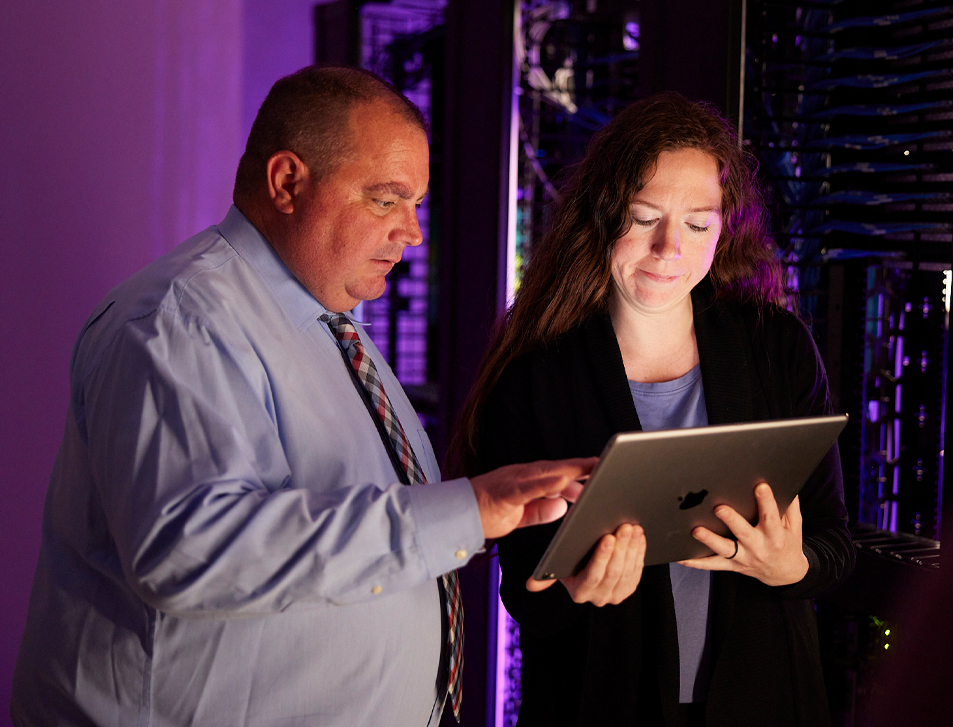

A highly diverse team imagining the undiscovered

RENAL RESEARCH INSTITUTE

Transforming
patient care
through data-driven
innovation

ABOUT THE RENAL RESEARCH INSTITUTE

The heart of RRI’s capacity for innovation is our ability to examine complex problems through multiple lenses.

The Renal Research Institute (RRI) is an internationally recognized incubator of ideas, treatment processes, and technologies to improve the lives of kidney patients. RRI’s leadership in data analytics, computational biomedicine and AI, as well as our access to a large patient population, accelerates the pace of scientific discoveries and their translation into applied medicine. Our team includes some of the brightest minds from around the world, who, along with their disciplinary expertise, bring a deep understanding of global healthcare issues and challenges.


Our Research

We operate at the intersection of clinical data, machine data, and real-world practice, with access to a large patient population and one of the world's largest and richest renal datasets. Our deep connection to the scientific community and to med-tech innovators gives us the rare ability to translate insight into action—quickly, precisely, and meaningfully.


Latest Research & News

Latest Research

  • Meijiao Zhou, Despina Ruessmann, Linda H Ficociello, Maria Gil Mir, Hans-Juergen Arens, Michael S Anger

    RESULTSAt baseline, mean age was 60 years, 58% were male, and mean sK was 5.60 ± 0.56 mEq/L. Following patiromer initiation, the proportion of patients achieving sK < 5.5 mEq/L increased from 35.6% to 69.9%. Mean sK decreased to 5.30 mEq/L at quarter 1 (Q1) and remained stable through Q4 (5.21 mEq/L). Mean sK reductions at Q4 were - 0.40, - 0.30, and - 0.21 mEq/L for patiromer doses of 8.4 g, 16.8 g, and 25.2 g once daily, respectively. Patiromer was most commonly prescribed once daily (55.9%) at 8.4 g (91.2%), and dose titrations were infrequent. Use of 1 mEq/L potassium dialysate declined from 17.2% to 11.0%. From baseline to 12 months, all-cause hospitalization rate decreased from 1.77 to 1.68 events per person-year (p = 0.004), while hyperkalemia-related hospitalizations declined from 0.35 to 0.20 (p < 0.0001). Serum calcium, sodium, phosphorus, and magnesium remained stable.CONCLUSIONSIn this large real-world cohort, lower serum potassium levels were observed following patiromer initiation over 12 months, along with stable electrolyte profiles and a low need for dose adjustments. Reductions in hospitalization rates were also observed over time but should be interpreted cautiously given the single-arm, retrospective design without a control group. These findings support the clinical utility of patiromer for chronic hyperkalemia management in HD patients.BACKGROUNDHyperkalemia is a common and potentially life-threatening complication among patients receiving maintenance hemodialysis (HD). Patiromer (Veltassa®) is an oral potassium binder with established potassium control efficacy in chronic kidney disease, but evidence in HD patients remains limited.METHODSWe conducted a retrospective, single-arm, cohort study of adult patients (n = 10,860) receiving in-center HD at Fresenius Kidney Care clinics who initiated patiromer between 2016 and 2022, comparing outcomes before (baseline: 3 months prior to initiation) and after initiation (up to 12 months of follow-up). Outcomes included changes in serum potassium (sK), treatment schedules, dosing patterns, and hospitalizations.

No Results Found

Latest News

No Results Found

Program

LATEST EPISODE

Beyond the Equation | Dr. Amaka Eneanya on Kidney Function, Clinical Change, and Communication

March 2, 2026

In this episode of Frontiers in Kidney Medicine and Biointelligence, host Len Usvyat, MD, is joined by Amaka Eneanya, MD, MPH, FASN, Adjunct Professor of Medicine at Emory University School of Medicine and former Chief Transformation Officer at Emory Healthcare. Dr. Eneanya reflects on kidney function estimation, the evolution of clinical tools in nephrology, and the role of communication, patient perspectives, and digital platforms in shaping medical discourse. This episode offers an in-depth discussion on how research findings move from theory into real-world clinical practice.