


A highly diverse team imagining the undiscovered

RENAL RESEARCH INSTITUTE

Transforming
patient care
through data-driven
innovation

ABOUT THE RENAL RESEARCH INSTITUTE

The heart of RRI’s capacity for innovation is our ability to examine complex problems through multiple lenses.

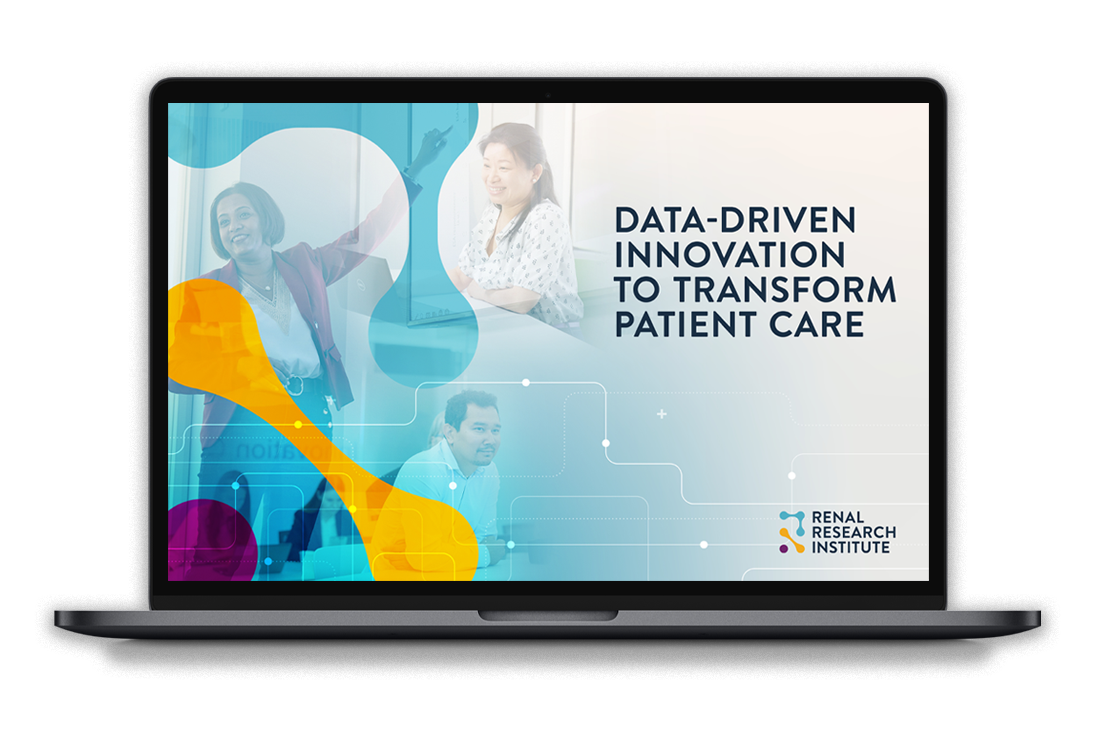
The Renal Research Institute (RRI) is an internationally recognized incubator of ideas, treatment processes, and technologies to improve the lives of kidney patients. RRI’s leadership in data analytics, computational biomedicine and AI, as well as our access to a large patient population, accelerates the pace of scientific discoveries and their translation into applied medicine. Our team includes some of the brightest minds from around the world, who, along with their disciplinary expertise, bring a deep understanding of global healthcare issues and challenges.


Our Research

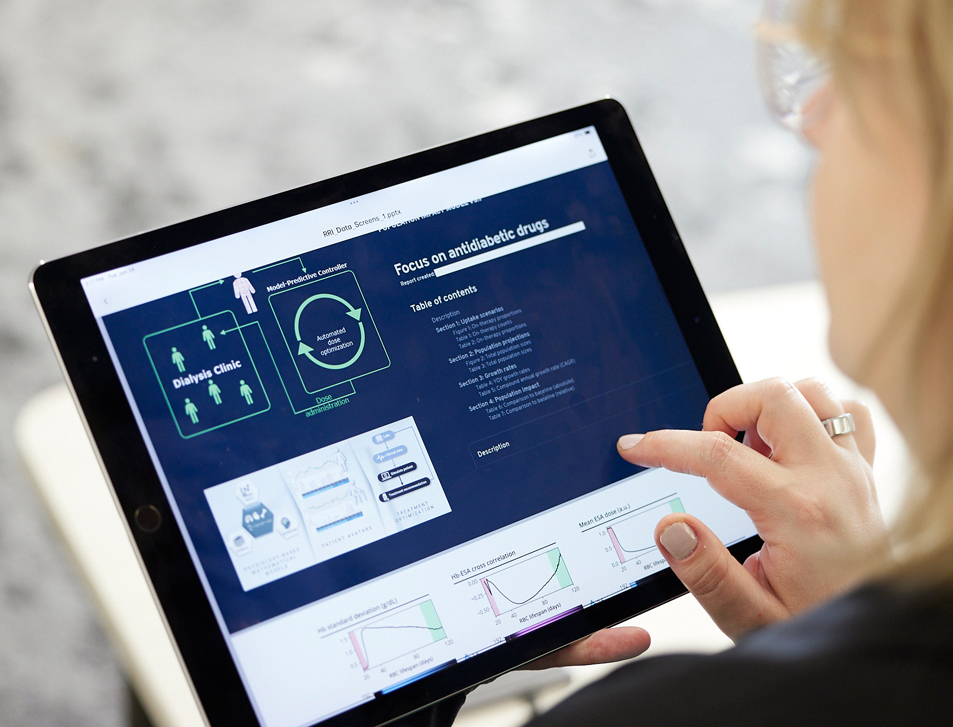
We operate at the intersection of clinical data, machine data, and real-world practice, with access to a large patient population and one of the world's largest and richest renal datasets. Our deep connection to the scientific community and to med-tech innovators gives us the rare ability to translate insight into action—quickly, precisely, and meaningfully.


Latest Research & News

Latest Research

  • Zijun Dong, Hanjie Zhang, Lin-Chun Wang, Andrea Nandorine Ban, Sarah Ren, Lela Tisdale, Maggie Han, Denzil Douglas, Piotr Starakiewicz, Norbert Shtaynberg, Nicholas Fuca, Andrzej Kozyra, Sindhuri Prakash-Polet, Valeria G Bittencourt, Laura Rosales M, Stephan Thijssen, Dean C Preddie, Peter Kotanko

    RESULTSWe analyzed 720 images from 120 incenter hemodialysis patients (six images per patient). Mean patient age was 62 years, 66 were male. Physicians classified 26 patients (22%) having "Advanced" aneurysms and 94 (78%) having "Not Advanced" aneurysms. The ACA achieved an AUROC of 0.908 (95% confidence interval: 0.843-0.963). At the maximum Youden index, ACA classified 42 aneurysms (35%) as "Advanced" and 78 (65%) as "Not Advanced," yielding a sensitivity of 96% and a specificity of 82%.CONCLUSIONThe ACA demonstrated promising accuracy in this initial masked evaluation. Further validation in larger, independent cohorts and under real-world conditions is warranted before broader clinical deployment.BACKGROUNDIn hemodialysis patients, arteriovenous fistulas (AVF) are the preferred vascular access for most hemodialysis patients. However, aneurysms of the AVF can lead to severe complications, including rupture and life-threatening exsanguination. To address this risk, we recently developed, trained, and validated a convolutional neural network capable of classifying digital images of arteriovenous aneurysms captured via mobile devices as showing either "Advanced" or "Not Advanced" aneurysms. This cloud-based aneurysm classification application (ACA) aims to facilitate early detection of advanced aneurysms, potentially reducing morbidity and improving outcomes. Our study aimed to compare the diagnostic performance of ACA with in-person aneurysm assessments by physicians specialized in vascular access care.METHODSWe conducted a single-masked, multicenter, observational, cross-sectional study at two vascular care centers with a catchment area of 21 hemodialysis clinics. Using mobile devices, research staff captured images of arteriovenous accesses and uploaded them to the cloud. The ACA then computed the probability of "Advanced" and "Not Advanced" aneurysms. Separately, physicians masked to the ACA results performed thorough physical and ultrasound examinations of the AVF and classified aneurysms as "Advanced" or "Not Advanced". Physician classifications served as the ground truth for ACA performance analysis.

No Results Found

Latest News

No Results Found

Program

LATEST EPISODE

Beyond the Equation | Dr. Amaka Eneanya on Kidney Function, Clinical Change, and Communication

March 2, 2026

In this episode of Frontiers in Kidney Medicine and Biointelligence, host Len Usvyat, MD, is joined by Amaka Eneanya, MD, MPH, FASN, Adjunct Professor of Medicine at Emory University School of Medicine and former Chief Transformation Officer at Emory Healthcare. Dr. Eneanya reflects on kidney function estimation, the evolution of clinical tools in nephrology, and the role of communication, patient perspectives, and digital platforms in shaping medical discourse. This episode offers an in-depth discussion on how research findings move from theory into real-world clinical practice.