

The MONitoring Dialysis Outcomes (MONDO) initiative is an international consortium of kidney care providers, academic institutions, and subject matter experts dedicated to advancing data-driven research on kidney disease and to improving outcomes for people receiving dialysis.

The MONDO initiative was launched in 2010, when researchers made an unexpected discovery in U.S. hemodialysis patients: in the months before death, clinical and laboratory parameters showed characteristic dynamic patterns. Motivated by this finding and to evaluate its generalizability, RRI and several of its collaborators decided to conduct similar studies in other regions of the world. Each member contributed anonymized data to a joint MONDO database and participates in studies.

Since its inception, the initiative has grown into a multinational collaboration between dialysis providers and academic institutions. MONDO has developed one of the largest international dialysis databases of longitudinal, treatment-level data for dialysis patients. In addition, the MONDO database contains a multitude of assessments ranging from lab measurements to bioimpedance spectroscopy assessments.

The MONDO Initiative Represents:

41 countries

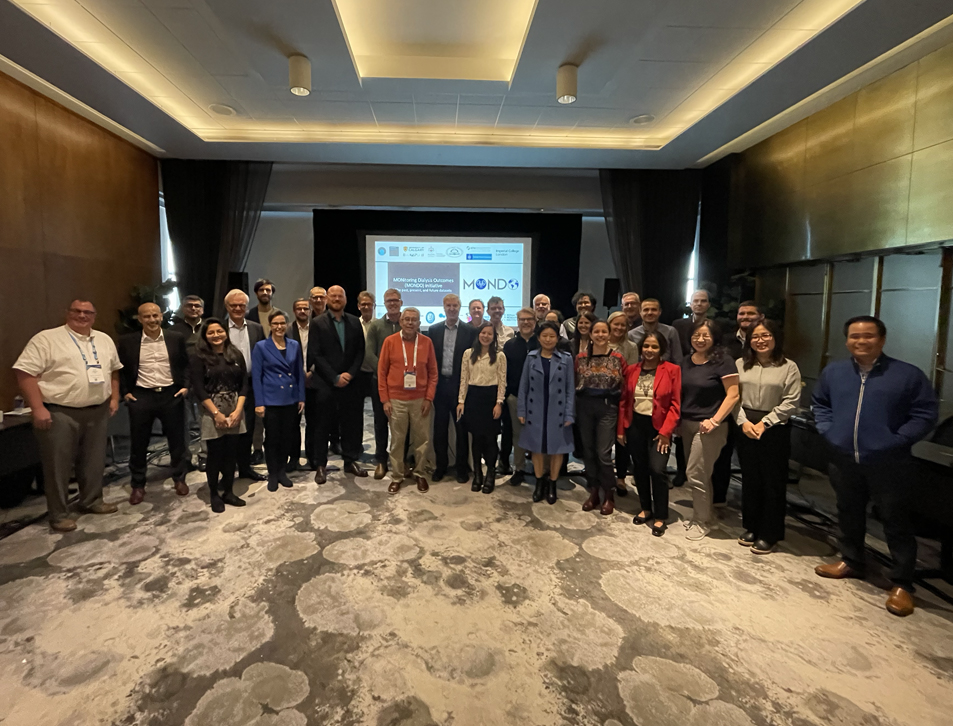
19 Steering Committee members

9 academic/industry institutions

Growing community of global partners

POWER OF COLLABORATION

The MONDO initiative integrates domain expertise, clinical data, and advanced analytics

  • Data from participating institutions worldwide deepen our understanding of patient characteristics, practice patterns, and physiology.

  • Our research evaluates the real-world generalizability of therapies and technologies and has enhanced the development of prognostic tools.

  • MONDO was among the first to conduct multinational research on pediatric HD patients, describe the impact of seasonality on HD patient outcomes, and demonstrate the deleterious effects of pre-HD fluid depletion.

  • Today and into the future, MONDO is informing the development of advanced models and AI-driven solutions.

  • In addition to the MONDO database, the MONDO initiative coordinates multiple partner databases representing millions of patients worldwide.

The MONDO Database Includes:

20

years of longitudinal observations

292,531

unique dialysis
patients

>100
MILLION

dialysis sessions

372

variable fields across 10 tables

MONDO RESOURCES

The MONDO Mock Data contains de-identified sample datasets that mirror the structure and format of the actual MONDO database. These example files allow researchers to explore the database schema, understand relationships between tables, develop analytical code, and test data workflows before accessing the full dataset. The mock data are intended for demonstration and development purposes only and do not represent real patient information.

The MONDO Data Dictionary provides a comprehensive reference for the harmonized variables included in the MONDO database. It describes the structure, definitions, and contents of each data table, enabling researchers to understand the available data elements, their clinical meaning, and how they are organized across the dataset. The data dictionary serves as the primary resource for study planning, data requests, and consistent interpretation of MONDO variables.

MONDO Publications

MONDO’S contributions to the nephrology community include more than 40 publications in peer reviewed journals.

  • Carmine Zoccali, Giovanni Strippoli, Francesco Locatelli, Francesca Mallamaci, Len Usyat, Stefano Stuard

    CONCLUSIONSFuture trials should be multicenter, phenotype-enriched, mechanism-specific, adequately powered, and endpoint-adjudicated. Endpoints should match the intervention: rhythm monitoring for potassium strategies, cardiac magnetic resonance and objective volume assessment for sodium or volume interventions, and integrated inflammatory, nutritional, vascular, and clinical outcomes for membrane-based approaches.AIMThis narrative review examines dialysis strategies intended to mitigate cardiovascular stress arising from cyclic volume loading, rapid ultrafiltration, electrolyte shifts, myocardial stunning, vascular stiffness, inflammation and anemia, middle-molecule toxicity, loss of residual kidney function, and the long interdialytic interval.EVIDENCE SYNTHESISRandomized trials and individual-patient-data meta-analyses have evaluated high-dose online hemodiafiltration, with some studies reporting improved survival compared with conventional hemodialysis. Results have varied across trials, and questions remain regarding treatment delivery, generalizability and the mechanisms underlying the observed effects. More frequent, nocturnal, and long-duration dialysis schedules improve intermediate endpoints, including left ventricular mass, blood pressure, phosphate control, ultrafiltration intensity, and treatment tolerance, but hard-outcome evidence remains limited. Expanded hemodialysis with medium cut-off membranes improves clearance of larger middle molecules, although cardiovascular benefit is unproven. Individualized dialysate potassium and sodium prescriptions are physiologically compelling precision-dialysis approaches targeting arrhythmia risk, volume overload, blood pressure, and cardiac remodeling, but definitive endpoint trials are needed. Incremental dialysis might preserve residual kidney function in selected incident patients, but cardiovascular benefit remains vulnerable to selection bias.BACKGROUNDCardiovascular disease remains the leading cause of death in patients receiving maintenance dialysis, whereas conventional thrice-weekly hemodialysis was developed primarily around small-solute clearance rather than cardiovascular protection.

  • Journal of the American Society of Nephrology

    22 Sep 2026 Hemodiafiltration: Clinical Practice of Today and a Look into the Future

    Peter J Blankestijn, Sanne Roos, Claudia Barth, Michiel L Bots, Krister Cromm, Andrew Davenport, Jörgen Hegbrant, Giovanni Strippoli, Robin W M Vernooij, Bernard Canaud

    Hemodiafiltration (HDF) with online production of substitution fluid has emerged as kidney replacement therapy and is increasingly adopted worldwide. Recent randomized controlled trials, individual participant data meta-analyses, and large real-world studies have demonstrated that high-volume HDF improves clinical outcomes compared with conventional high-flux hemodialysis (HD), including reduction in all-cause mortality and hospitalization. Importantly, these benefits appear dose-dependent, with achieved convective volume serving as a modifiable treatment target. Beyond survival, data suggest advantages in patient reported outcomes and evidence for cost-effectiveness. This review provides a practical overview of contemporary HDF delivery, focusing on the prescription variables that determine treatment performance, including vascular access, blood flow rate, filtration fraction, treatment time, dialyzer characteristics, and machine technology. Current evidence suggests that high-volume post-dilution HDF can be achieved safely and reproducibly in routine clinical practice using standard thrice-weekly treatment schedules and contemporary dialysis platforms. Monitoring should extend beyond conventional small-solute clearance metrics to include indicators of middle-molecule removal and patient-centered outcomes. Future developments are expected to move HDF from a uniform prescription strategy towards a more individualized approach. Emerging data support refinement of convection-volume targets according to patient characteristics and treatment response, while incorporation of patient-reported outcomes and predictive models may facilitate precision-based therapy. Advances in automation, digital monitoring, biosensors, and artificial intelligence are most likely to further optimize treatment delivery and personalization. Although implementation requires investment in infrastructure, training, and quality assurance, growing evidence suggests that these costs may be offset by improved clinical outcomes, reduced healthcare utilization, and enhanced sustainability. Collectively, current evidence supports high-volume HDF as among the most effective dialysis modality currently available and it is likely to become the global standard for kidney replacement therapy.

No Results Found

Connect and Collaborate

WE INVITE YOU TO BRING US YOUR DATA-DRIVEN RESEARCH IDEAS

If you would like to become a MONDO member and work with us to develop a research project, access our database, or attend an event, please fill out the interest form. RRI coordinates MONDO activities and research project proposals are approved by our steering committee. MONDO also includes groups dedicated to specific areas of research and expertise. These peer-led committees, along with our data analytics committee, help review and support research projects.  

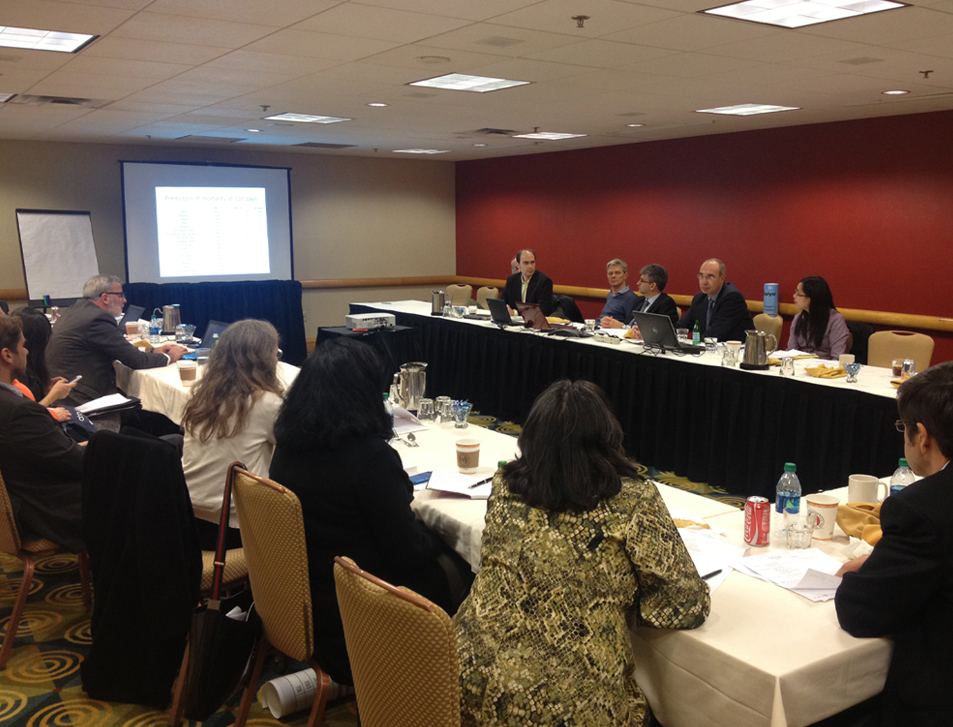
MONDO Through the Years

Contributing Member Institutions

University of Calgary 
Marcello Tonelli, MD, SM, MSc, FRCPC

Catharina Hospital
Constantijn Konings, MD, PhD

Pontifícia Universidade Católica do Paraná
Thyago Proença de Moraes, MD, PhD

University of Khartoum
Rasha Hussein, MD, PhD

Imperial College London 
Neill Duncan, MBBS, BSc, FRCP

Renal Research Institute
Len Usvyat, PhD

Fresenius Medical Care Asia-Pacific
Milind Nikam, MD

Fresenius Medical Care Canada
Edwin Toffelmire, MDCM, FRCPC, FACP

Fresenius Medical Care Europe, the Middle East and Africa
Adrián Guinsburg, MD & Stefano Stuard, MD, PhD

Fresenius Medical Care Latin America
Adrián Guinsburg, MD

Committees and Chairpersons

MONDO Steering Committee 
Sheetal Chaudhuri, PhD

Secretary to the Steering Committee
Kaitlyn Croft, MS; Samuele Aloi, BSc

Scientific Advisory Group
Peter Kotanko, MD, FASN

Chronic Kidney Disease MONDO
Guillermo Garcia-Garcia, MD

Hemodialysis MONDO
Jeroen Kooman, MD, PhD

Peritoneal Dialysis MONDO
Caio Pellizzari, MD

PICCOLO MONDO
Maria Ferris, MD, MPH, PhD

Data Management Group
John Larkin, PhD

Data Analytic Committee
Yuedong Wang, PhD